
The Number
What is a good DSCR ratio?
Short answer: 1.2+ is good, 1.0 qualifies, and the ladder runs further down than most investors think.
A good DSCR ratio is 1.2 or higher— the property's rent covers its full payment with a 20%+ cushion. 1.00 is the standard qualifying minimum on most programs, 1.25+ commonly unlocks better pricing, and published tiers run down to 0.80 and 0.75 — with No-Ratio programs skipping the test entirely.
The DSCR ladder
1.50+
Excellent
Strong cushion. Best leverage and pricing tiers open; the property comfortably outearns its debt.
1.25 – 1.49
Strong
A common pricing breakpoint — many programs improve terms at 1.25. Comfortable margin for vacancies and repairs.
1.00 – 1.24
Qualifying
The property carries itself. 1.0 is the standard program minimum; expect standard terms.
0.80 – 0.99
Sub-1.0 tier
Published program tiers exist at 0.80 — typically wanting stronger credit or a larger down payment.
0.75 – 0.79
Lower band
The deepest published sub-1.0 tier we see in program guidelines. Compensating strength required.
No minimum
No-Ratio
No-Ratio DSCR programs skip the coverage test entirely for deals that stand on equity, credit and reserves.
Tiers reflect common program guidelines as of 2026; specific breakpoints vary by program.
Why the ratio isn't the whole story
Two properties can post the same 1.10 and be very different deals. DSCR prices alongside credit and leverage: a 1.10 with 740 credit and 30% down reads differently than a 1.10 at the credit floor with minimum down. Interest-only structures change the math too — qualifying on the IO payment lifts the ratio, which is a legitimate strategy, not a trick.
And a "bad" ratio is often a rent-data problem, not a property problem. The appraiser's market-rent schedule — not your Zillow guess — is the number that counts, and short-term-rental programs may count platform income long-term leases can't match. How the rent gets measured is half the answer. The mechanics live on how DSCR loans work.
Stop guessing. See your actual ratio.
Address in — estimated value and market rent out. Unlock your DSCR and LTV free, then a specialist reads it against the actual tiers above.
Good-DSCR FAQ
What is a good DSCR ratio?
1.2 or higher is generally considered good — the rent covers the full payment with at least a 20% cushion. 1.0 is the standard qualifying minimum on most DSCR programs, 1.25+ often unlocks better pricing tiers, and 1.5+ is excellent. Programs also exist below 1.0 (published tiers at 0.80 and 0.75) and No-Ratio options skip the test entirely.
Is a DSCR of 1.0 good enough to qualify?
Usually yes — 1.0 is the standard minimum on most DSCR programs, meaning the rent exactly covers the full monthly payment. You won't have cushion, and pricing is better above it, but 1.0 is the qualifying line most programs publish.
Can I get a DSCR loan with a ratio below 1.0?
Yes. Programs publish sub-1.0 tiers at 0.80 and 0.75, generally in exchange for stronger credit or more down payment, and No-Ratio programs skip the DSCR minimum entirely. Below-1.0 deals are a structuring conversation, not an automatic decline.
How do I calculate my DSCR?
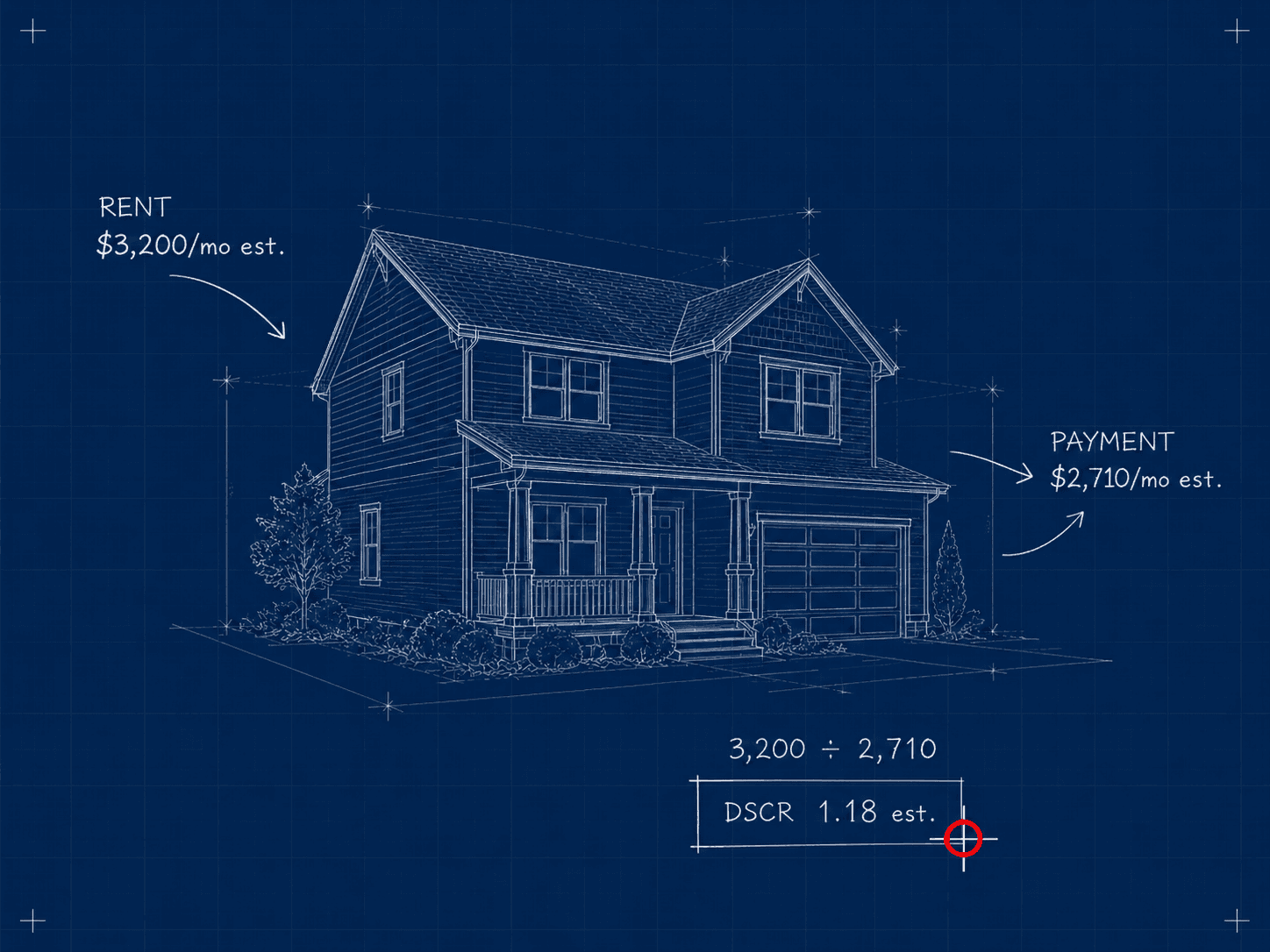
Divide the property's monthly rent by the full monthly payment — principal, interest, property taxes, insurance, and HOA dues (PITIA). Example: $3,200 rent ÷ $2,710 payment = 1.18. On interest-only programs, many lenders compute the ratio using the IO payment, which raises the result.
Does a higher DSCR get me a better rate?
Generally yes — DSCR is a pricing input alongside credit score and LTV. Crossing common breakpoints (1.0, 1.25) tends to improve the available terms, and stronger ratios support higher leverage. The exact effect is program-specific, which is what a live analysis checks.
Ready to get started?
Request your free DSCR Analysis in about 30 seconds — or talk it through with a specialist first. No pressure, no obligation.